
Sapele
Sapele: A Sustainable Hardwood Rivaling Mahogany
It is a prized tropical hardwood, admired for its beauty, durability, and versatility. Often compared to mahogany, it boasts several advantages, including a more sustainable supply chain and a broader spectrum of grain patterns. These qualities make it an excellent choice for furniture, cabinetry, flooring, and various woodworking projects. In this article, we will delve into the properties of Sapele wood, explaining why it might be the ideal selection for your next endeavor. Moreover, through careful keyword research, this page is optimized for search engines, ensuring it connects with the broadest possible audience.
The Origins and Sustainability of Sapele
Where Does Sapele Come From?
(Entandrophragma cylindricum) originates in the rainforests of West Africa, flourishing in countries such as Nigeria, Ghana, and the Ivory Coast. Reaching heights of up to 150 feet, these impressive trees have trunk diameters that can surpass 6 feet. Notably, it is a large hardwood tree that usually exhibits a very straight trunk, with minimal branching below 80 feet. As a result, this characteristic yields long, straight-grained lumber, perfect for diverse applications.
Is Sapele Sustainable?
While not currently endangered, Sapele is considered “vulnerable” due to deforestation and over-harvesting. Therefore, responsible sourcing is paramount to guaranteeing the long-term sustainability of this valuable resource. Fortunately, Timbersource Limited champions ethical forestry practices, sourcing its Sapele from sustainably managed forests in West Africa. Indeed, many suppliers, including Timbersource Limited, hold Forest Stewardship Council (FSC) certification, a testament to their commitment to responsible forest management. Consequently, by choosing Sapele from Timbersource, you can be assured that your purchase supports responsible forestry, helping to protect this valuable species for future generations.
A History Steeped in Tradition
More Than Just Lumber
The narrative of Sapele wood is as rich and varied as the grain itself. Historically, African communities have utilized it for diverse purposes, from crafting boats to creating musical instruments. This enduring historical significance, therefore, underscores Sapele’s lasting appeal and adaptability, solidifying its continued popularity in both traditional and modern applications.
Sapele’s Distinctive Appearance and Physical Properties
A Visual Feast: Color and Grain
It is renowned for its rich, reddish-brown hue, frequently compared to mahogany. The heartwood, however, can vary from golden to dark reddish-brown, often showcasing a ribbon-like figure due to its interlocking grain. This distinctive “ribbon stripe” pattern is particularly pronounced in quartersawn lumber. Beyond the ribbon pattern, Sapele wood can display a range of other figured grain patterns, including pommele, quilted, mottled, wavy, beeswing, and fiddleback. Such a remarkable variety in grain patterns, thus, makes Sapele a favorite among woodworkers who value unique and visually striking lumber.
Strength and Stability: Key Characteristics
With a Janka hardness rating of 1360 lbf, it is a dense and durable hardwood, surpassing the hardness of most North American species. It is, in fact, nearly twice as hard as genuine mahogany. Its density and hardness, therefore, contribute significantly to its stability, minimizing the likelihood of warping or shrinking. Furthermore, it exhibits good natural resistance to moisture, rot, and insects. The specific gravity of this wood is 0.56 (basic) and 0.67 (12% MC). For those interested in its technical aspects, Sapele boasts a modulus of rupture of 16,070 lbf/in² and an elastic modulus of 1,790,000 lbf/in².
Understanding the Interlocked Grain
As the tree grows, the wood fibers of Sapele twist around the trunk, resulting in an interlocked grain. This interlocked grain is a key factor in its superior stability and resistance to warping. Because of this, it is an excellent selection for projects where dimensional stability is paramount, such as furniture making and exterior joinery.
Working with and Finishing Sapele
A Woodworker’s Delight?
Generally, it is easy to work with using both hand and power tools. It saws with relative ease, finishes beautifully, and is effectively peeled and sliced for veneers. The interlocked grain, though, can sometimes lead to tearout during planing or routing. Also, it’s important to note that Sapele can react with iron, potentially causing discoloration or staining. Using sharp tools and taking precautions to avoid iron contact is, therefore, highly recommended when working with it.
Finishing Touches
A variety of finishes, including oil-based and water-based products, as well as stains, are accepted by Sapele. While oil-based finishes tend to highlight the wood’s natural beauty, water-based finishes offer a more environmentally conscious option. In the end, the best finish will depend on the desired aesthetic and the wood’s intended use.
The Many Applications of Sapele Wood
From Furniture to Flooring
The adaptability and appealing appearance of Sapele make it suitable for a broad array of applications. For example, some common uses include:
- Furniture: Sapele is a superb choice for high-quality furniture, such as tables, chairs, and cabinets. Its durability and stability ensure that furniture pieces will endure for many years.
- Cabinetry: Because of its rich color and attractive grain patterns, Sapele is a popular choice for kitchen cabinets, bathroom vanities, and other cabinetry projects.
- Flooring: Sapele’s hardness and resistance to wear make it a durable and visually appealing flooring option.
- Musical Instruments: As a result of its tonal properties and resonant qualities, Sapele is often used for the bodies of electric and acoustic guitars.
- Boatbuilding: Sapele’s resistance to moisture and rot makes it suitable for boatbuilding and other marine applications.
- Exterior Applications: With proper treatment and maintenance, Sapele can be utilized for exterior projects like decking, siding, and outdoor furniture. In particular, it provides an excellent substrate for paint, making it well-suited for exterior painted applications.
Comparing Sapele to Mahogany
A Worthy Alternative
It is frequently compared to mahogany because of its similar appearance and characteristics. Sapele does, however, offer several benefits over mahogany:
| Feature | Sapele | Mahogany |
|---|---|---|
| Sustainability | More sustainable | Often over-harvested |
| Availability | More readily available | Can be difficult to source |
| Stability | More stable | Less stable |
| Grain Pattern | Wider range of patterns | More limited patterns |
| Cost | Typically more affordable | Typically more expensive |
Due to its stability, availability, and attractive grain patterns, it is increasingly recognized as a superior substitute for genuine mahogany in many applications. In summary, it provides a blend of beauty, performance, and sustainability that makes it a compelling choice for discerning woodworkers and homeowners.
Related Species
Similar Woods
While Sapele possesses a unique character, other wood species share similar traits. For example, Bosse (Leplaea cedrata), an African hardwood, closely resembles Sapele in appearance and even shares a similar cedar-like scent.
Cost Considerations
Is Sapele Expensive?
The price of Sapele wood can fluctuate based on quality, thickness, and origin. Although generally more affordable than genuine mahogany, its price reflects its quality and sustainability credentials. Therefore, investing in ethically sourced, high-grade Sapele is not only a choice for beauty and durability but also a responsible investment in the environment.
Maintenance and Care
Keeping Sapele Looking its Best
Maintaining Sapele wood in optimal condition is straightforward with regular care. For example, dusting with a soft cloth and avoiding harsh chemicals will help preserve its finish. To maintain furniture, periodic polishing with a suitable wood oil can rejuvenate its appearance and protect it from drying out. Clearly, preventative care can significantly extend the life and beauty of Sapele wood.
Health and Safety
Precautions When Working with Sapele
Although severe reactions are rare, it has been known to cause skin and respiratory irritation in some individuals. For this reason, when working with Sapele, it’s advisable to follow standard woodworking safety precautions, such as wearing a dust mask and ensuring adequate ventilation.
Conclusion
The Final Verdict on Sapele
It is a stunning and versatile hardwood that provides a sustainable alternative to mahogany. Its durability, stability, and workability make it an exceptional choice for a wide array of woodworking projects, from fine furniture to exterior applications. Furthermore, the unique grain patterns and rich color of this wood add a touch of elegance to any project. When choosing it from Timbersource Limited, you can be certain you are receiving high-quality lumber from a sustainable source. Dedicated to ethical forestry practices, Timbersource Limited provides a wide selection of Sapele lumber to meet your specific requirements.
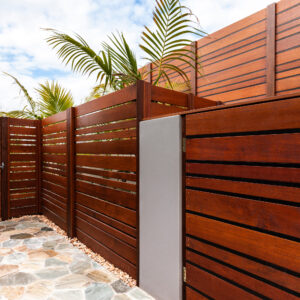
Sapele garden partitioning